
One of the things that makes understanding modern slavery confusing is that different definitions are used in Australia and overseas for these kinds of offences. Some are based on local legislation, others are based on international human rights definitions.

At Survivor Connections we use a universal, human rights-based definition of modern slavery as a guide:

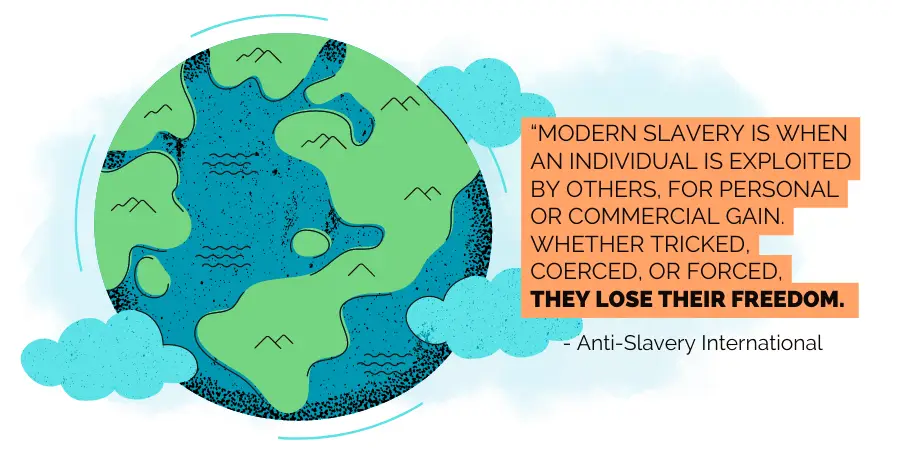
Modern slavery is the use of force, deception, or coercion to exploit someone for personal or commercial profit.

It takes away a person’s freedom and agency, treating them as though they are owned.

The term ‘slavery’ carries a lot of shame and stigma, so it can be hard for people to process that they have had this kind of experience. Sometimes we know that our experiences have had a huge impact, but we don’t know what name to give them.
Understanding the definitions and legislation for modern slavery crimes can be helpful in processing what happened to us.

International definitions

The international definitions are slightly different than Australian definitions but are very useful in understanding what aligns with international law.

The Trafficking Victims Protection Act of 2000 (TVPA) defines severe trafficking in persons as:

Sex trafficking is when a commercial sex act is induced by force, fraud, or coercion, or in which the person induced to perform such an act has not attained 18 years of age OR The recruitment, harbouring, transportation, provision, or obtaining of a person for labour or services through the use of force, fraud or coercion for the purpose of involuntary servitude, peonage, debt bondage or slavery

A person need not be physically transported from one location to another for the crime to fall within this definition.

The differences in definitions and laws can make it confusing to know who qualifies as having experienced modern slavery or human trafficking. It makes it harder for survivors to feel their experiences are valid. Understanding the language helps put words to what we have been through.